Most people who ask how to do SEO for their website are really asking a different question. They want to know the order of operations. What comes first, what matters most, and what can be ignored without consequence. I have run this process enough times to know that the sequence matters more than any single tactic. Do things in the wrong order and you will spend months optimising pages that search engines cannot even reach.
How to Do Search Engine Optimization for My Website
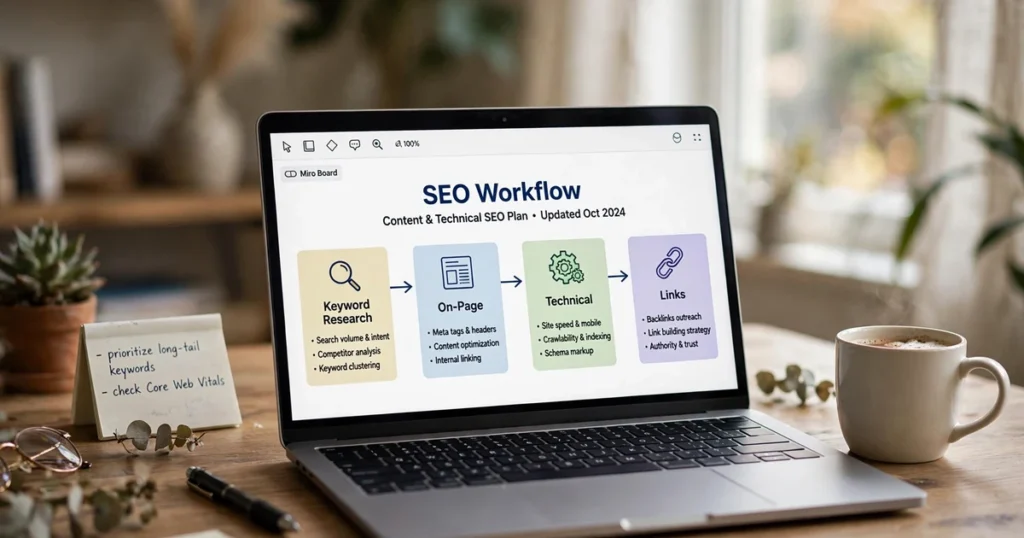
The honest answer is that you start with an audit, not with keywords. Before you write a single title tag, you need to know what shape your site is in. Crawl the whole site and look for the basics:
- Pages that return errors
- Pages blocked from indexing
- Duplicate title tags
- Missing meta descriptions
- Images without alt text
- Internal links that go nowhere
A proper SEO audit will surface these issues in an afternoon, and fixing them often produces the fastest ranking movement you will ever see, because you are removing obstacles rather than building anything new.
Once the foundation is clean, move to keyword research. The mistake most site owners make here is targeting keywords they want to rank for instead of keywords their buyers actually type. I start with the pages that already earn revenue and work backwards to the searches that should land on them:
- A product page needs commercial-intent terms.
- A buying guide needs comparison terms.
- A blog post needs informational terms that can be tied back to a product with one clear call to action.
Keyword research done this way keeps every page pointed at a commercial outcome instead of vanity traffic.
Then comes on-page optimisation, page by page, starting with the pages closest to revenue:
- One primary keyword per page.
- A title tag that reads naturally and includes it near the front.
- A meta description written to earn the click, not to stuff keywords.
- Headings that structure the content the way a buyer would scan it.
- Body copy that answers the search intent completely enough that the visitor has no reason to go back to the results.
This is unglamorous work, and it is where most DIY SEO efforts stall, because optimising fifty product pages properly takes real hours.
After the pages are in order, address the technical layer:
- Site speed
- Mobile rendering
- Crawl budget
- Indexation control
- Structured data
- Site architecture
They all sit here. Technical SEO is the part nobody sees and everybody feels. A slow site with clean content will lose to a fast site with decent content more often than people want to admit, because both search engines and visitors punish friction.
Finally, build authority. Links from relevant, trustworthy sites remain one of the strongest ranking signals, and they are also the slowest to earn:
- Digital PR
- Genuinely useful content that people reference
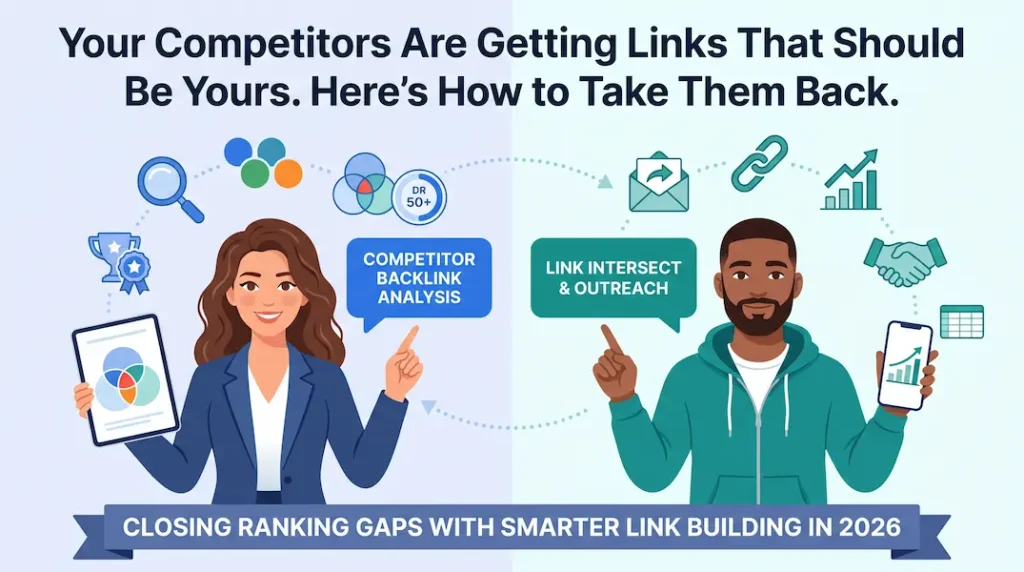
- Direct outreach to sites that link to your competitors
These will get you there. Expect this phase to take months, not weeks, and be deeply suspicious of anyone who promises hundreds of links overnight.
How to Make Search Engine Optimization Work for Your Website
Doing SEO and making SEO work are two different things. The difference is almost always measurement and iteration. I have seen sites with flawless on-page work that never moved because nobody checked:
- Whether the pages were actually indexed
- Whether the target keywords had realistic competition
- Whether the content matched what searchers wanted
Start by being honest about competition. A new site targeting “project management software” is not competing on content quality. It is competing on a decade of domain authority it does not have. Pick battles you can win: longer, more specific queries where the current ranking pages are thin, outdated, or written by generalists. Win a cluster of those, build authority, then move up the difficulty ladder. This is how small sites beat big ones, one winnable cluster at a time.
Then track the right things. Rankings matter, but revenue matters more. I track:
- Organic traffic to commercial pages
- Conversion rate from organic
- The number of keywords in striking distance (positions 4 to 20, where a push can actually move the needle)
A monthly review of these numbers tells you whether the work is compounding or whether you are polishing pages nobody will ever find.
The other half of making SEO work is patience with a feedback loop. SEO is slow because search engines are conservative. A change you make today might take six to twelve weeks to fully register. That does not mean you wait passively. It means:
- Ship a batch of improvements
- Wait for the data
- Read what the data says
- Ship the next batch
Sites that treat SEO as a project fail. Sites that treat it as a process win.
One more thing that separates working SEO from busywork: content that deserves to rank. Search engines have become very good at recognising when a page exists to rank rather than to help. If your content reads like it was written for an algorithm, visitors bounce, and the algorithm notices the bounce. Write for the buyer first, then make sure the technical signals are clean. That order is not negotiable.
How to Search Engine Optimization Your Website
The phrasing is awkward, but the question underneath is practical: what are the actual mechanics of optimising a website for search engines? Here is the working checklist I use, stripped of theory.
- Make the site crawlable. Submit an XML sitemap, keep the robots.txt permissive for the sections you want indexed, fix redirect chains, and make sure important pages are no more than three clicks from the homepage. If a crawler cannot reach a page efficiently, nothing else you do to that page matters.
- Make every important page indexable and worth indexing. That means a unique, descriptive title tag, a meta description that earns clicks, one clear H1, and content that fully answers the query behind the target keyword. Thin pages with a paragraph of generic copy do not rank in competitive spaces anymore. They never really did; the bar was just lower.
- Structure the site so authority flows. Your homepage carries the most authority, and internal links distribute it. Link from high-authority pages to the commercial pages you want to rank, using descriptive anchor text. Most sites I audit have their link equity trapped in blog archives and footer links while their money pages sit three levels deep with a single internal link pointing at them.
- Prove the site is fast and stable. Compress images, defer non-critical scripts, use caching, and pick hosting that does not buckle under load. Core Web Vitals are the formal measurement, but the real test is simpler: does the page feel instant on a mid-range phone with an average connection? If not, fix it before you write another word of content.
- Mark up what matters. Product schema, review schema, FAQ schema, and breadcrumb schema help search engines understand your pages and can earn richer results. This is also where AI search enters the picture. The same structured, factual, clearly attributed content that earns rich results is the content that gets cited by ChatGPT, Perplexity, Gemini, Claude, Copilot, and Google AI Overviews. Optimising for traditional search and optimising for AI answers increasingly point at the same work: clear structure, real facts, and quotable answers.
What Is Website Search Engine Optimization?
Strip away the jargon and website search engine optimization is the practice of making your site the best answer to the searches your buyers perform. It has three pillars, and you need all three:
- Relevance. Your pages must match what searchers want, in the language they use, at the depth they expect. This is why keyword research and search intent analysis come before writing. A page can be beautifully written and still fail if it answers a question nobody asked.
- Accessibility, in the technical sense. Search engines must be able to find, crawl, render, and index your pages without friction. They must load fast, work on mobile, and present clean signals about what each page is about. Most of this is invisible to visitors, which is exactly why it gets neglected.
- Authority. Search engines need reasons to trust your site over the thousands of others targeting the same queries. That trust comes from links, brand mentions, reviews, and the accumulated signal of visitors who land on your pages and stay. Authority is the slowest pillar to build and the hardest to fake, which is why it remains the most durable competitive advantage in SEO.
When someone asks what website search engine optimization is, this is the answer I give: relevance, accessibility, authority, applied consistently over time. Everything else is detail.
The process is not complicated, but it is demanding:
- Audit first
- Target winnable keywords
- Optimise the pages closest to revenue
- Fix the technical foundation
- Build authority month after month
Measure revenue, not just rankings. And write for buyers, because the search engines, traditional and AI alike, keep getting better at rewarding the pages that genuinely help.