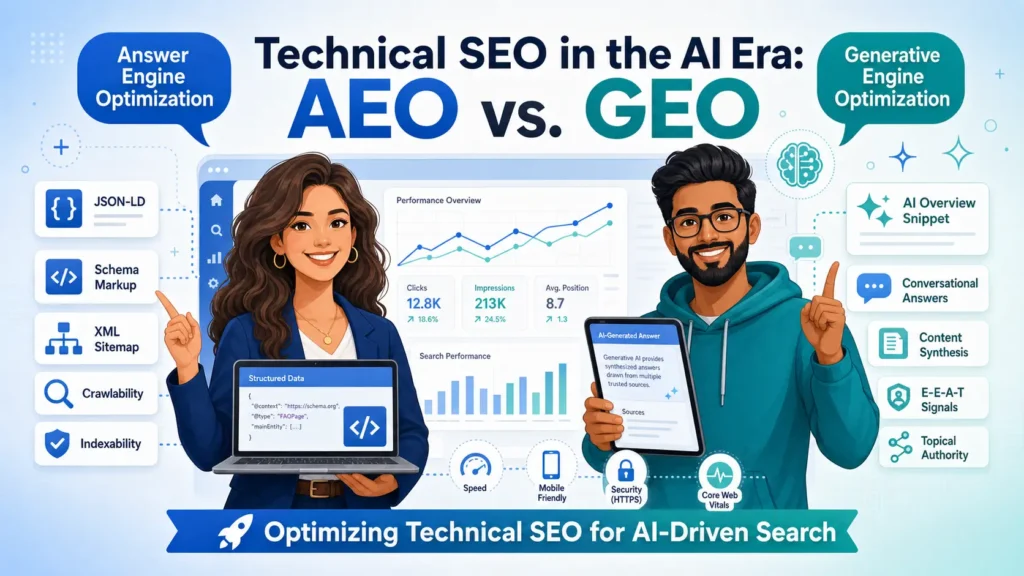
Shopify already handles the boring technical SEO for you. Automatic sitemaps, canonical tags, SSL, mobile responsiveness: all done out of the box. That is the uncomfortable truth most SEO app listings skip, because it raises the obvious question. If Shopify does all that, what exactly are you paying $39 a month for?
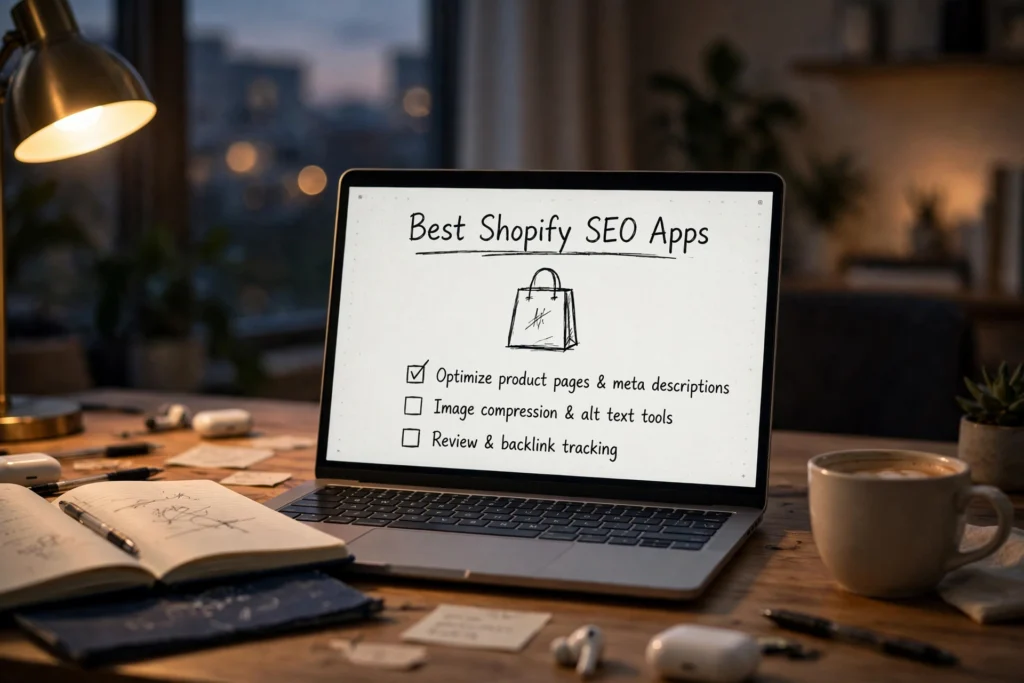
The honest answer is that a good SEO app fills the gaps Shopify leaves open. Bulk alt text across a thousand product images. JSON-LD schema that actually validates. Broken links that get caught and redirected before they cost you rankings. Image compression that does not require a developer. Meta templates you can roll out across product types in an afternoon. None of that ships with a default Shopify install, and doing it by hand on a real catalogue is a special kind of misery. That is what you are paying for: automation of the tedious middle layer between Shopify’s solid foundation and the rankings you want.
I dug through the Shopify App Store listings, review pages, third-party roundups, and merchant complaints to put this list together. Everything here is public information, and I am giving you my straight read on each app. Three apps, in the order I would evaluate them: SearchPie, Avada SEO, and Booster SEO. All three carry 4.8 stars or better across thousands of reviews, which tells you the category is mature. The differences are in what each one is actually best at, and I will be blunt about where each one falls short.
How I picked these three
I judged everything against the same questions. Does it do something Shopify does not do natively, or does it charge you for what you already have? Is the free plan genuinely useful, or is it a demo wearing a free badge? What do merchants keep saying in reviews, and what do the one-star reviews complain about? How does it behave on a store with five thousand products instead of twelve? And the question SEO apps hate: does it slow your store down while claiming to speed it up? One bad review is noise. A pattern across dozens of reviews is the truth.
The three at a glance
| App | Starting price | Rating | Standout feature | Best for |
|---|---|---|---|---|
| SearchPie | Free; $39/mo Prime; $99/mo Enterprise | 4.9 (2,300+ reviews) | Guided SEO audits with AI-generated fixes | Merchants who want to understand and fix issues themselves |
| Avada SEO | Free; $34.95/mo Pro; $99/mo Enterprise | 4.9 (4,600+ reviews) | Speed suite plus SEO at the cheapest paid entry | Budget-conscious stores and image-heavy catalogues |
| Booster SEO | Free; $39/mo Pro; $69/mo Premium | 4.8 (5,400+ reviews) | AutoPilot hands-off fixes with 24/7 human support | Merchants who want SEO handled without touching settings |
Before we go deeper, one rule that applies to all three. Every one of these apps edits your theme code. Back up your theme before installing any of them, and again before uninstalling. This is the single most repeated piece of advice across every honest review and roundup I read, and the merchants who skip it are the ones writing the angry one-star reviews.
In depth
1. SearchPie
SearchPie, built by PieLab, is the auditor of this list. It holds 4.9 stars across more than 2,300 reviews on the App Store, with 94 percent of those being five stars. Pricing runs from a free plan up through Prime at $39 a month and Enterprise at $99 a month. That $39 entry point is the joint-highest of the three, so it needs to earn it.
What it earns it with is the audit experience. SearchPie runs intelligent SEO reports across your store and landing pages, detects issues, and pairs the findings with guidance on resolving them. It plugs into Google Search Console, tracks keyword rankings, and sends real-time notifications when something breaks. For a merchant who actually wants to understand what is wrong with their store rather than just watch a score go up, this is the most instructive of the three. The reports do not just flag problems; they walk you toward fixes.
The rest of the suite covers the expected ground thoroughly. AI-generated meta titles and descriptions, bulk alt tag optimisation, image compression, JSON-LD rich snippets, broken link autopilot, automatic 404 handling with AI-powered navigation, AMP support, instant page loading features, and even AI-generated product descriptions via ChatGPT. There is also backlink analysis, which is unusual in this category and a genuine plus. Support gets consistent praise by name in reviews, with merchants mentioning individual advisors who walked them through SEO insights.
The honest limits start with price. Thirty-nine dollars a month is a lot if you only use half the features, and the reviews say so directly. One merchant called it “a pretty pricey service” that does “the bare minimum for the monthly cost,” arguing every feature could be found cheaper elsewhere. That is harsh, but the underlying point is fair: SearchPie makes sense when you use the audits, the reports, and the guidance as a system. If you just want alt text and compression, you are overpaying. The jump from the limited free tier to $39 is also steep for a small store, and there is no middle step to grow into.
Failon’s POV: This is the best pick if you want to learn while you fix. The audits are genuinely good, the guidance is clear, and merchants who engage with the reports get real value. But be honest about your own behaviour. If you are the kind of merchant who installs an app and never opens its dashboard again, do not pay $39 a month for reports you will not read. Buy it for the audit workflow or do not buy it at all.
2. Avada SEO
Avada is the volume leader here, with 4.9 stars across roughly 4,600 reviews, the largest review count of the three. Pricing is Free, then Pro at $34.95 a month, then Enterprise at $99 a month. That $34.95 Pro tier is the cheapest paid entry on this list, and the free plan is genuinely usable: lifetime free, image optimisation for up to 50 products a month, and unlimited alt text optimisation. For a small store just getting started, that free tier covers the two most tedious image tasks without spending anything.
The speed story is Avada’s strongest pitch. Instant page speed boost through image compression, lazy loading, and code minification, all aimed at the image-heavy stores where Shopify’s defaults start to strain. During a sale, when your collection pages are loaded with banners and product shots, compression and lazy loading are the difference between a page that converts and one that bounces. Avada handles that side well, and merchants consistently report faster-feeling stores after setup.
On the SEO side, it is a full suite. Meta tags, local business markup, Google structured data and rich snippets, an automated SEO audit covering products, collections, and blog posts, broken link detection with 404 redirects, sitemaps, internal link building, keyword optimisation, and blog post SEO. There is an AI audit agent and checklist guiding the work, plus SEO reports with email alerts so issues surface without you hunting for them. It is the broadest feature set per dollar of the three.
The honest limits are about what happens when an app touches your theme. Multiple sources flag theme disruption as the main risk, and one roundup notes the app can interfere with sitemap integrity. The worst review I found was brutal: a merchant reported their LCP worsened from 4 to 7 seconds after installing, with no customer service response and no refund. That is a single account against thousands of positive reviews, and the developer did respond to it, but it underlines the rule I stated up top. Back up your theme. Test on a duplicate first if your store matters to you. The AI features are also assistant-level rather than magic: useful for drafting and checklists, not a replacement for judgment.
Failon’s POV: Best value on the list, full stop. The free plan is real, the Pro tier is the cheapest here, and the feature set is the broadest per dollar. If you run an image-heavy store and want speed plus SEO in one install, start here. Just treat the theme-code risk seriously. Duplicate your theme, install, test your speed scores before and after, and keep the backup. Do that and Avada is the easiest recommendation of the three.
3. Booster SEO
Booster SEO, from the Booster SEO team, is the autopilot option. It carries 4.8 stars across more than 5,400 reviews, the largest review pool of the three even at the slightly lower rating. Pricing is Free, then Pro at $39 a month, then Premium at $69 a month. The pitch is focus: unlike generalist SEO tools retrofitted for Shopify, this is built exclusively for Shopify by a dedicated team the company describes as 30-plus people with a decade of experience. Whether you buy the team-size claim or not, the Shopify-only focus shows in the product.
The defining feature is AutoPilot. You set customisable rules, and the app identifies and fixes SEO issues on its own: alt text, meta tags, broken links with automatic redirects, image compression, link monitoring. For a merchant who wants technical SEO handled without opening a dashboard full of settings, this is the closest thing to a set-and-forget option on the list. It also handles the standard suite well: bulk image compression, meta tag optimisation, auto JSON-LD, sitemap management, and URL keyword optimisation on the higher tier.
What genuinely separates it in 2026 is the AI search angle. Booster adds LLMs.txt and structured data aimed at AI search visibility, which puts it ahead of the other two on the question every merchant will be asking next year: not just “do I rank on Google” but “do ChatGPT and Perplexity cite my products.” That forward positioning matters, and none of the competing roundups I read credited the other apps with an equivalent feature.
Then there is the support, which reviewers praise by name, repeatedly. Twenty-four-seven human chat where merchants mention individual staff members who solved their problems. In a category where support is usually a ticket queue and a prayer, that is a real differentiator, and it matters most exactly when something goes wrong with your theme at midnight before a sale.
The honest limits are the paywalls. Meta title and description optimisation, arguably the core SEO task, requires the Pro plan. The free tier covers alt text and basics but not much more, so treat it as a trial with no expiry date rather than a usable free plan. A few reviewers also questioned whether the paid tiers justify the cost, saying they needed more time to evaluate the ROI. That is fair: AutoPilot is only worth $39 a month if you trust it enough to let it work, and trust takes time to build.
Failon’s POV: If you want SEO handled rather than SEO explained, this is your app. AutoPilot plus genuinely excellent support is a combination neither competitor matches, and the LLMs.txt and AI search features show the team is thinking about where search is going, not just where it has been. The 4.8 rating across the biggest review pool on this list backs it up. Just know that the free plan is thin and the real product starts at $39. Go in on Pro or do not go in at all.
Final verdict
There is no single best Shopify SEO app, because the right choice depends on how involved you want to be. What there is, is a clear pick for each situation.
On a tight budget or just starting out, install Avada’s free plan. Lifetime free, unlimited alt text, image optimisation for 50 products a month: it covers the tedious basics without costing anything, and the $34.95 Pro tier is there when you outgrow it. Just back up your theme first.
If you want to understand your store’s SEO and fix it yourself, choose SearchPie. The audits and guided reports are the best teaching tool of the three, and merchants who actually read the reports get their money’s worth. At $39 a month, it is priced for merchants who will use it weekly, not install and forget.
If you want it handled, choose Booster SEO Pro at $39 a month. AutoPilot does the work, the 24/7 human support catches what automation misses, and the AI search features are the most forward-looking of the three. It is the best fit for a busy merchant whose time is worth more than the subscription.
One last thing worth saying plainly. No app here replaces the two things that actually move rankings: product content worth reading and links worth following. These apps handle the technical layer brilliantly, and the technical layer matters, but a store with thin supplier copy and zero backlinks will not rank because its alt text is optimised. Fix the content, earn the links, and let one of these apps handle everything in between.